Monday, 22 January 2018

American Eagle 'body positivity' campaign

You can add to your Fairy Liquid Advert paragraph that clothing companies are beginning to represent different body shapes in their adverts, e.g. http://aplus.com/a/american-eagle-outfitters-i-can-fall-2017-campaign-video?no_monetization=true
American Eagle began a campaign in 2017 to promote body positivity, showing pictures of different-sized women advertising their clothes.

Also, a plus-sized model who has made it big in Hollywood, Ashley Grahm, has also become famous for promoting positive body image.
America Eagle

Ashley Grahm
Another great point to add to your essay might be the Netflix genre 'Women that rule the stage'

Tuesday, 9 January 2018

Women in Film 2018


Talk Show host Oprah Winfrey's powerful acceptance speech at the 2018 Golden Globes Awards (when she won a Lifetime Achievement Award) further raised awareness of the representation of women in the film and media industry. In wake of a torrent of accusations of years of harrassment and abuse, from Harvey Weinstein (film producer and co-founder of Miramax films) to Kevin Spacey (who was subsequently dropped from the Netflix series House of Cards), women attending the awards wore black to symbolise solidarity. Winfrey said that "a new day is on the horizon" "when nobody has to say 'Me Too' again" (referring to the social media campaign against sexual harrassment of women).

Tuesday, 18 July 2017

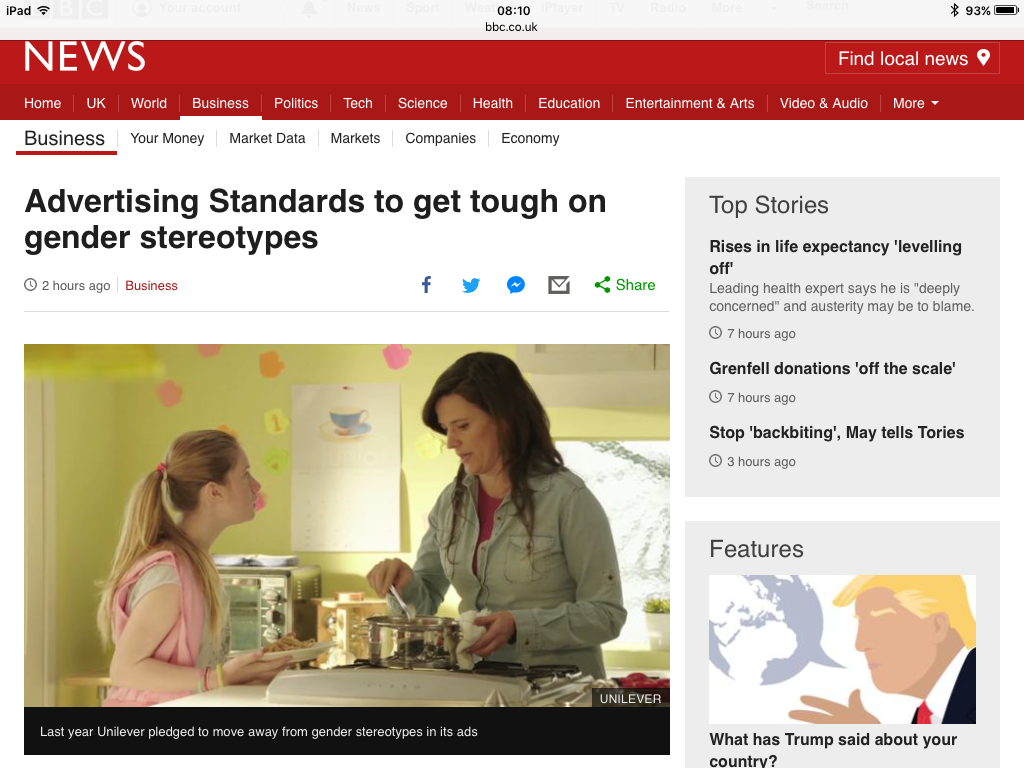
Advertising Standards Fight Gender Stereotyping

Recently, the Advertising Standards Authority has revised its regulations to combat gender stereotyping in adverts:


'Wonder Woman' put an end to female stereotyping in film?

Reviews of the recently-released 'Wonder Woman' suggest that the film could put an end to the mistaken idea amongst film companies that 'women don't sell films'. What do you think?


Friday, 30 June 2017


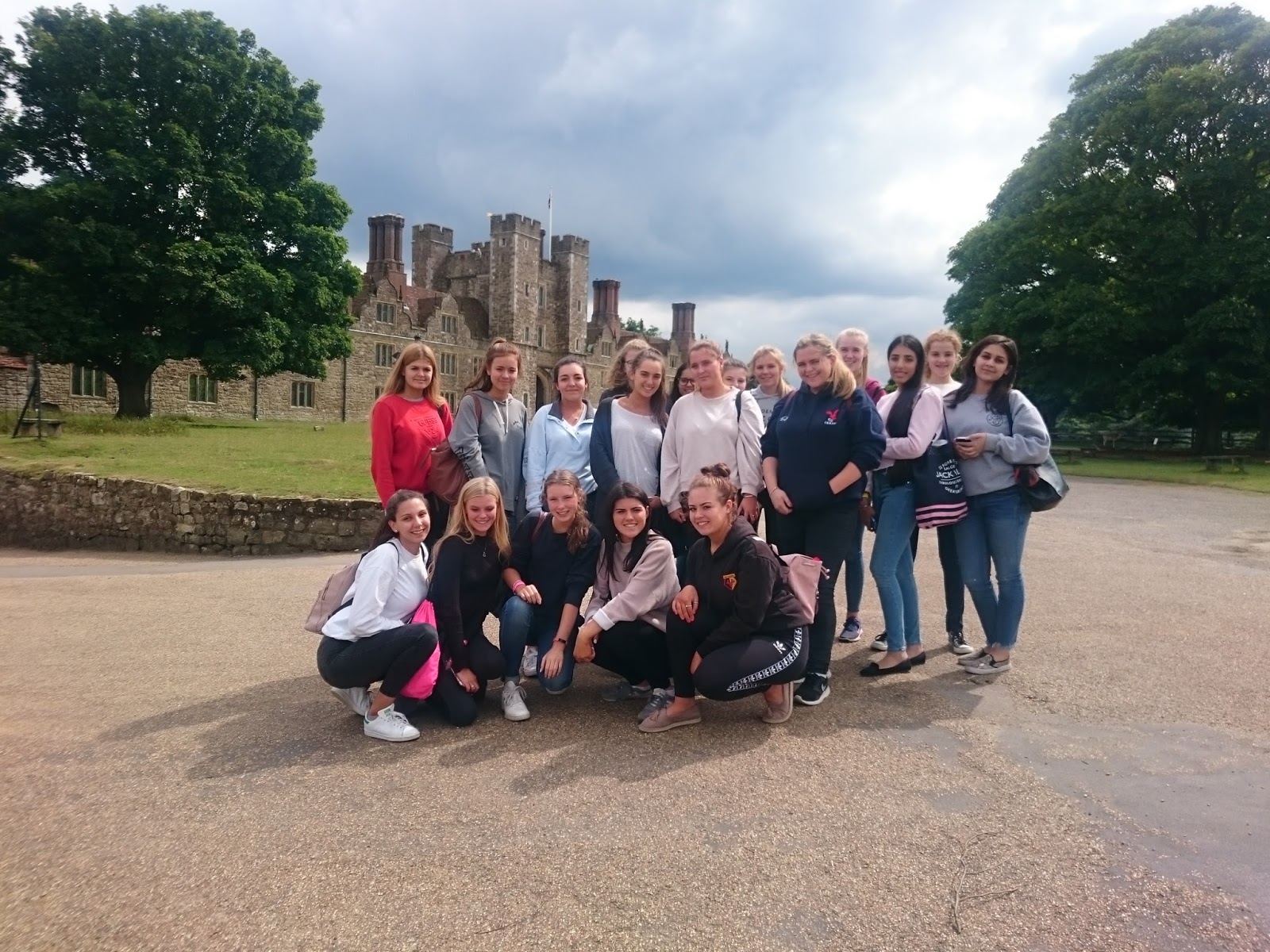
Well done to our Y12 students who made it in bright and early after the Prom to travel to Kent for this amazing immersive drama performance looking at gender over time. Concluded by a screening of Sally Potter's 1990 film of Virginia Wolf's 'Orlando', it was a fabulous introduction to our study of the representation of women over time.

See  http://www.bfi.org.uk/news-opinion/news-bfi/interviews/orlando-sally-potter-virginia-woolf-queer for more.


Tuesday, 9 May 2017

Article from 'The Guardian' on Women in Film


Why, in 2016, are women still (mostly) silent film stars?

Study lays bare the fact that women are given far less dialogue than male actors – because it’s men who still get to tell the stories that form our cultural narratives
In Mulan, the dragon got more lines than the heroine.
In Mulan, the dragon got more lines than the heroine. Photograph: image.net
It’s rare to have proof that the less sexually desirable a woman is perceived to be, the less anyone cares what she has to say. And yet, Polygraph’s study of who is granted on-screen dialogue in more than 1,000 movies does exactly that: the percentage of dialogue allotted female characters waned after actors hit 31, dropped precipitously after they hit 42 and all but disappeared when they hit 65.
But when in 2014 80% of films had no women credited as writers, perhaps it’s to be expected that women overall had fewer lines and that the on-screen women the mostly male writers and directors thought audiences would like to hear are the youngest.
Maybe it’s even just par for the course that a summer would-be blockbuster such as Men in Black 3 had just one woman with enough lines to show up in the Polygraph study: “Hot Pants Girl”. (Then again, even testosterone action fest Expendables 3 gave its sole female speaker an on-screen name, even if she didn’t have that much dialogue.)
Still, when the dragon in Mulan has more dialogue than the titular character, when films with casting gender parity feature men speaking more often than women, and when only 18% of films have women as two of the top three speaking parts (a scenario that male actors go into 82% of the time), the question isn’t just whether women are underrepresented in Hollywood.
The question is who gets to give voice to the stories that form our shared cultural narrative, and the answer is “men”.
Though women aren’t proportionately represented on screen, in speech or behind the cameras, they are in front of the screens: women make up a larger share of movie audiences in the US than men and female-led movies have a stronger return-on-investment than male-led movies (even controlling for budget disparities, as Hollywood tends to spend more money on male-led films).
And yet, when we go to the movies, women are rarely the leads unless it’s a “women’s” movie – and sometimes, even when it is, we still aren’t the ones doing most of the talking.
Research from the University of Southern California’s Annenberg School for Communication and Journalism shows that for every one woman who speaks even in films with less than an R rating, there are around three male speaking characters and that crowd shots have an average of 17% women (a ratio that hasn’t changed since 1946).
It’s nonetheless rare – unless you count Geena Davis – that anyone comments on the lack of women on screen and speaking. Studies such as the Annenberg one show that we view a lack of female representation as normal, and we view actual demonstrable parity as giving unequal weight to women.
The lack of female representation isn’t intentional or even probably conscious: it’s just that when women aren’t seen and aren’t heard in public and cultural spaces, we come to view that absence as normal. We come to see the “everyman” as, well, a man: we learn to identify with men, to see ourselves in men (even as women) and to see the woman’s perspective as the minority one, even if we are a slight demographic majority.
Movies starring, featuring and weighted male are just movies; movies starring, featuring and weighted female are “chick flicks”, and ones that supposedly only women want to see.
That the data on “chick flicks” and female moviegoers doesn’t support the false hypothesis that women aren’t enough of an audience to matter to Hollywood hasn’t done nearly enough to spur change in the industry or our society. Just witness all the griping about Rey’s ascendence in Star Wars: The Force Awakens. Some male fans seemingly couldn’t see themselves in an orphan stranded on a desert planet who has access to The Force and helps defeat the Empire in battle unless that orphan was male like Luke Skywalker or Finn, John Boyega’s character, and complained that the movie had gone too far by casting a woman in the lead. But 78% of the dialogue was spoken by men and Finn had more lines than Rey, even though The Force Awakens had the highest percentage of dialogue spoken by women (28%): in the original movie, Episode IV, just 6% of the dialogue was spoken by women.
One outspoken woman is apparently, at least subconsciously, viewed as equivalent to two men – in cinema, and sometimes in life. And while that feels like the start of the joke, it’s not really funny to the two-thirds of women left standing silently on the sidelines to make things feel more “equal”.

https://www.theguardian.com/film/2016/apr/12/women-film-speaking-roles-2016-study-hollywood

Monday, 21 November 2016

Representation of Women in Magazines


'The media do not construct identity, they merely offer a window on the world' - essay plan


A2 Collective Identity Essay Plan - representation of women in the media from stmarysmediastudies

Key theorists in this discussion (in order of appearance):


  • Dr Sallie Westwood, 'Power and the Social' (2001)
  • Rosalind Gill, 'Gender and the Media' (2006)
  • David Gauntlett, 'Media, Gender and Identity' (2008)
  • Anthony Giddens, sociologist, known for his theory of Structuration, 'Modernity and Self-identity' (1991)
  • Max Almy, 'Difference: On Representation and Sexuality' (1984)
  • Marjorie Ferguson, 'Forever Feminine: Women's Magazines and the Cult of Femininity' (1983)
  • Janice Winship, 'Inside Women's Magazines' (1987)
  • Gaye Tuchman, 'Making News: A Study in the Construction of Reality' (1978)
  • Newbold, 'Mass Communication Research Methods' (1998)
  • J Tunstall, 'The Media in Britain' (2000)
  • Naomi Wolf, 'The Beauty Myth' (1991)
  • Jean Kilbourne, 'Deadly Persuasion: Why Women and Girls Must Fight the Addictive Power of Advertising' (1999)


Monday, 23 May 2016

Cannes Winner, British director, Andrea Arnold

Director Andrea Arnold's win of the Jury Prize at the Cannes Film Festival is, of course, one in the net for female film directors.
See a writeup here: http://filmmakermagazine.com/98565-ken-loach-xavier-dolan-top-surprising-cannes-awards-ceremony-andrea-arnolds-american-honey-wins-jury-prize/#.V0LtzTUrK1s

With Ken Loach winning the coveted top prize, the Palme d'Or, this was a great year for British film directors. Arnold's 'American Honey' is an exuberant and lyrical US-shot road movie about a trouple of homeless teens selling magazines across the Midwestern hearland. Arnold has received the prize twice before, for Red Road and Fish Tank.

IMDB link to 'American Honey':
http://www.imdb.com/title/tt3721936/

Friday, 20 May 2016

Suffragette Case Study

This 2015 film has been hailed as a milestone in the efforts to both celebrate historical moments where women have achieved great things, and to push forward the representation of women both on and off screen.

http://www.theguardian.com/film/2015/oct/07/suffragette-london-film-festival-meryl-streep-carey-mulligan


Meryl Streep defends feminist credentials as Suffragette opens London film festival


Planned protest and controversy over untactful tie-in t-shirts are backdrop for gala screening of film telling story of the campaign to secure women the vote
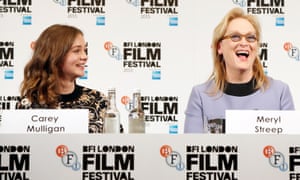
‘We need inclusion. It has to be equal’ … Carey Mulligan and Meryl Streep at the Suffragette press conference. Photograph: John Phillips/Getty Images for BFI


Suffragette review – a valuable, vital film about how human rights are won

The London film festival opens with the European premiere of Sarah Gavron’s suspenseful tale of fighters from opposing sides of the class divide starring Carey Mulligan and Meryl Streep

Read more

It has taken a decade to get off the ground, but as Suffragette received its UK premiere as the opening film of the London film festival, the film’s director revealed that she was determined not to be knocked off course in her quest to make her 10-year “passion project”. “A film is never easy,” said Sarah Gavron, “but this was a tough proposition because we wanted to stick to our guns. We pushed through all the obstacles.”

Gavron was speaking at a press conference before Suffragette’s gala screening in London’s Leicester Square, and scriptwriter Abi Morganadded: “A film that is fronted by an ensemble of women, and they are not being funny or romantic, is hard. That became a huge obstacle.”

Suffragette tells the story of the militant campaign in support of women’s voting rights in the UK, and features Carey Mulligan – who appeared at the press conference only three weeks after the birth of her first child - as a laundress called Maud Watts, a fictional working-class character whose struggle is the centre of the drama. Suffragette also features Meryl Streep as Emmeline Pankhurst, Natalie Press as Emily Davison, the activist who died at the 1913 Epsom Derby; andHelena Bonham Carter as Edith Ellyn, an amalgamation of more than one prominent suffragette.
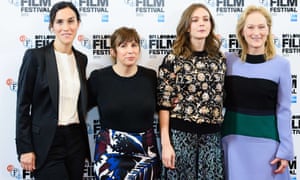
FacebookTwitterPinterest Streep and Mulligan with Sarah Gavron and Abi Morgan. Photograph: LEON NEAL/AFP/Getty Images

The film-makers explained their decision to focus on a peripheral figure in the suffragette struggle, and a fictional one at that. Streep said: “The great achievement of the film is that it’s not about women of a certain class; it’s about a working girl, a young laundress, who looks like us, and the circumstances of her life were out of her hands, completely.” Mulligan, whose character joins the suffragettes’ campaign after years of toil in a laundry, suggested that this focus meant that it was more relevant to contemporary audiences than a straight historical biopic. “It doesn’t feel like a documentary about the past, it feels like a film about today. I always felt it’s resonance was about where we are now, and its achievement is to mark what these women did, and what they gave to us. Of course, we still live in a sexist society, but the film allows us to look at where we are today.”

However, despite the film’s positive message about female empowerment – inside the film industry, as well as in the wider world – Suffragette has found itselfdogged by an unexpected furore over T-shirts the cast wore for a magazine photo-shoot –bearing the words “I’d rather be a rebel than a slave” – taken from a line Pankhurst says in the film, at which some African-American commentators took offence, suggesting the contribution of non-white campaigners was being ignored. Morgan addressed the controversy by saying: “It would be a pity if the negative connotations of that conversation – and it is an important conversation – overshadowed the true and sincere intentions of the film, which is to empower all women, globally, to look for equality for all women. That to me is the really important narrative. But the discourse is really important, and it is vital we keep talking about it.”

Streep also responded to questions over her refusal to describe herself as a “feminist” in a recent interview. “There is a phrase in the film – ‘Deeds not words’ – and that is where I stand on that. I let the actions of my life stand for what I am, as a human being. Contend with that, not the words.”

The film’s status as something of a political hot potato was reinforced by the declaration of activist group Sisters Uncut to stage a protest at the premiere event against cuts to domestic violence services.
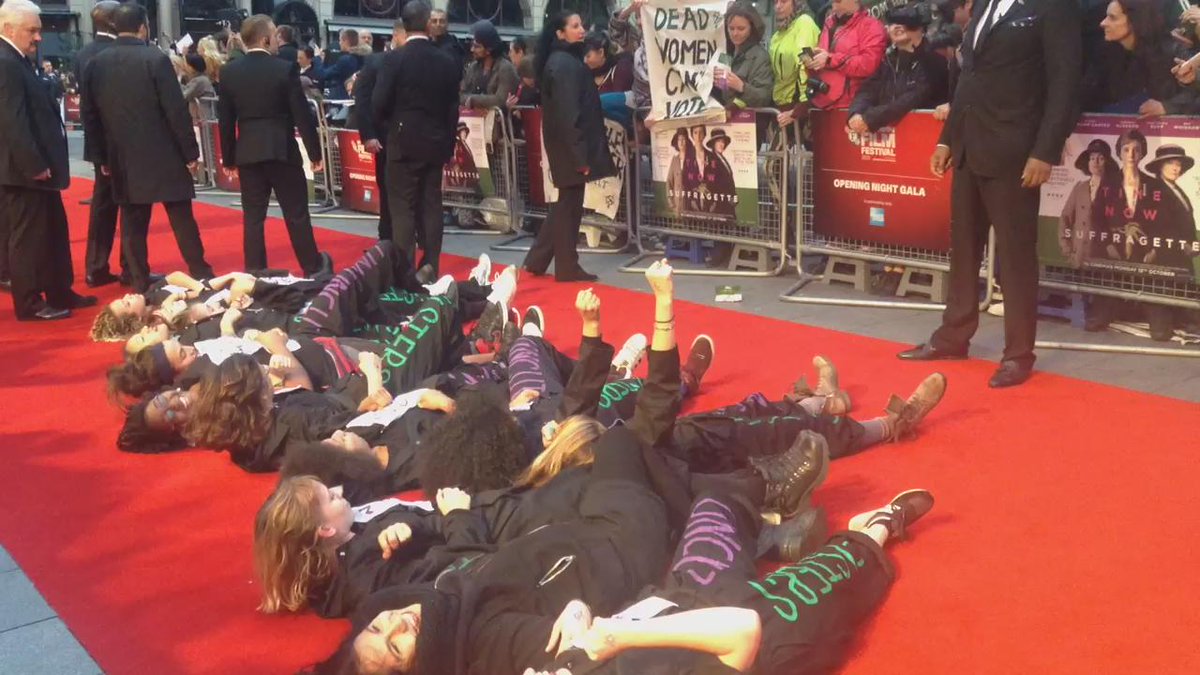
— Emma Jones (@EmmaPJones)October 7, 2015

#suffragette premiere just decided to ignore protesters. V British. All v polite#deadwomencantvote pic.twitter.com/RRGJCS4M3j

Having described this year’s edition of the London film festival as “the year of strong women”, festival director Clare Stewart said that Suffragette “first and foremost, tells an important story made by British women”, and that given the commitment to diversity by the British Film Institute, the festival’s parent body, giving the film the opening slot felt “entirely appropriate”. She said: “The issue over gender equality, especially in the film industry, has become an increasingly important one. It’s clear there is talent everywhere, but not a lot of opportunity.”

In accordance with its powerful themes of gender struggle, empowerment and solidarity, the production has also made much of its female-dominated creative team, led by director Gavron (previously best known for the film adaptation of Monica Ali’s Brick Lane) and scriptwriter Morgan, whose film work includes The Iron Lady, Shame and The Invisible Woman. Gavron said that the cast and crew had formed “an immediate bond”. “There was an unusual sense of camaraderie,” she said. “Partly it was because we were telling a story everybody felt very passionate about, but also because there was an unusual balance: we had men, and we had women, in key positions, and that was exciting.”

However, Streep did have harsh words for forces in the film world that she considered negatively influenced audiences’ appreciation of films that might appeal to women. Saying she wanted to investigate “buzz”, and how people decided which films to see, Streep cited the reviews aggregator site Rotten Tomatoes for its skewed gender balance, saying she tabulated 168 women critics and bloggers on the site, as opposed to some 760 men. “If the Tomatometer is tilted so completely to one set of tastes, it affects box office, absolutely... the word isn’t ‘disheartening’, it’s ‘infuriating’. Because people accept this as received wisdom. It isn’t fair. We need inclusion. It has to be equal.”

Monday, 16 May 2016

Susan Sarandon on Women in Film at Cannes Film Festival 2016


Susan Sarandon: if Thelma and Louise was being made today, it would be a cartoon


Actresses Susan Sarandon and Geena Davis attend Kering Talks Women In Motion At The 69th Cannes Film Festival. CREDIT: VITTORIO ZUNINO CELOTTO/GETTY IMAGES FOR KERING

Hannah Furness, arts correspondent, in cannes 16 MAY 2016 • 7:14AM


It was the original feminist roadtrip movie, nominated for six Oscars and tipped as heralding a new era for women in film.

But Thelma and Louise may not even get made today, according to its stars, as Susan Sarandon says it would have to be turned into "an animation".
After Thelma and Louise, they predicted there would be so many films starring women. But it didn't happenSusan Sarandon


Sarandon, who played Louise in the 1991 film, said corporate studios are now increasingly staffed by men taught to commission film by formula, who lack the imagination to see women in leading roles.

Speaking at the Cannes Film Festival to celebrate 25 years since the release of Thelma and Louise, Sarandon and Geena Davis lamented the lack of progress in Hollywood since their landmark film made the headlines.

When asked if she thought it would ever get commissioned today, Sarandon said: "Maybe as an animation?

"I mean everybody thought that they're were going to be so many more buddy films [afterwards].

"Well I don't think the studios have fallen off their horse and had some kind of epiphany about women in film.

"After Thelma and Louise, they predicted there would be so many films starring women. But it didn't happen."
Actress Susan Sarandon attends Kering Talks Women In Motion At The 69th Cannes Film Festival. CREDIT: VITTORIO ZUNINO CELOTTO/GETTY IMAGES FOR KERING


Speaking at a Kering Women in Motion event, part of a festival-long series, Davis added: "And that's one of the really uncomfortable things, because when they said that I believed it. It didn't happen.

"The thing about film is it can change overnight. It isn't like real life, where it takes so long to get women to be half of congress or boards or CEOs.

"The next movie somebody makes can be gender balanced. We don't have to sneak up on it, just do it."

When asked about what was holding Hollywood back, Sarandon said: "There are still many more male executives making these decisions.
But why should we not be paid as preposterously as men?Susan Sarandon


"Hollywood has become more and more corporate and the kind of people making those decisions and the basis on which they're making those decisions.

"Whereas women can see a woman or a man in a leading role, I don't think it's as easy for a guy to see a woman in a leading role and say 'I'll get behind that'.

"I think it's a cultural thing, and that's part of what slows it down: a lack of imagination on the part of men.

"It's done in a very formulaic way."

She joked she too would not survive as a modern celebrity starting out today, with scrutiny over the every move of actresses.

On the issue of equal pay, she argued Hollywood actors were "all paid preposterously considering what we do".


"But why should we not be paid as preposterously as men?" she added.

Speaking of the reaction to the original release of Thelma and Louise, which sees the two leading ladies on the run after running into trouble with the law, Sarandon said: "I don't know if you remember, but there were a lot of people who were very offended by the movie.
We were making a buddy film where we had power and choices, but I certainly didn't anticipate that it would be such an affront, that we had backed into this white, male, heterosexual landscape that had been that long held. Really we were just having a good timeSusan Sarandon

"Because women having those kind of options got people upset, suddenly we were accused of condoning suicide which was ridiculous.

"I can't say that when we made it we were making a feminist film.

"We were making a buddy film where we had power and choices, but I certainly didn't anticipate that it would be such an affront, that we had backed into this white, male, heterosexual landscape that had been that long held.

"Really we were just having a good time."

Sarandon also shared her frank views on a wide range of subjects, from film to politics.


At one point, she took on the festival's most controversial topic of sex abuse allegations levied at the director Woody Allen.

Last week, his son Ronan Farrow complained Allen, who is in Cannes with his film Cafe Society, had not received enough scrutiny for the allegations, which have not been proven in court.

Sarandon said: "I think he sexually assaulted a child and I don't think that's right."

Tuesday, 1 March 2016

Representation of Gender - A* Points to use

See revisionworld.com for some really good revision points, especially if you want to gain a Level 4 in this section of the exam.

Media representations of gender
KEY POINT - Almy et al. (1984) argue that media representations of gender are important because they enter the collective social conscience and reinforce culturally dominant (hegemonic) ideas about gender which represent males as dominant and females as subordinate. Sociologists argue that media representations not only stereotype masculinity and femininity into fairly limited forms of behaviour, but also provide gender role models that males and females are encouraged to aspire to.
However, Gauntlett (2008) points out that sociological analysis of media representations needs to be cautious, because of the sheer diversity of media in Britain.
Traditional media representations of femininity
  • Women are generally represented in a narrow range of social roles by various types of media, whilst men are shown performing a full range of social and occupational roles. Tunstall (2000) argues that media representations emphasise women’s domestic, sexual, consumer and marital activities to the exclusion of all else. The media generally ignore the fact that a majority of British women go out to work. Men, on the other hand, are seldom presented nude or defined by their marital or family status.
  • Working women are often portrayed as unfulfilled, unattractive, possibly unstable and unable to sustain relationships. It is often implied that working mothers, rather than working fathers, are guilty of the emotional neglect of their children.
  • Tuchman et al. (1978) used the term symbolic annihilation to describe the way in which women’s achievements are often not reported, or are condemned or trivialised by the mass media. Often their achievements are presented as less important than their looks and sex appeal. Newbold’s research (2002) into television sport presentation shows that what little coverage of women’s sport there is tends to sexualise, trivialise and devalue women’s sporting accomplishments.
  • Research into women’s magazines suggests that they strongly encourage women to conform to ideological patriarchal ideals that confirm their subordinate position compared with men. Ferguson(1983) conducted a content analysis of women’s magazines from between 1949 and 1974, and 1979 and 1980. She notes that such magazines are organised around a cult of femininity, which promotes a traditional ideal where excellence is achieved through caring for others, the family, marriage and appearance. However, Ferguson’s ideas were challenged by Winship (1987), who argued that women’s magazines generally play a supportive and positive role in the lives of women. Winship argues that such magazines present women with a broader range of options than ever before and that they tackle problems that have been largely ignored by the male-dominated media, such as domestic violence and child abuse.
  • Wolf (1990) suggests that the images of women used by the media present women as sex objects to be consumed by what Mulvey calls the male gaze. According to Kilbourne (1995), this media representation presents women as mannequins: tall and thin, often US size zero, with very long legs, perfect teeth and hair, and skin without a blemish in sight. Wolf notes that the media encourage women to view their bodies as a project in constant need of improvement.
  • Content analysis of teenage magazines in Britain indicates that almost 70% of the content and images focus on beauty and fashion, compared with only 12% focused on education or careers. Many encourage the idea that slimness=happiness and consequently Orbach (1991) suggests that such media imagery creates the potential for eating disorders.
The media as empowering women
KEY POINT
Sociologists have noted the increasing number of positive female roles emerging, especially in television drama and films. It is argued that these reflect the social and cultural changes that females have experienced in the last 25 years, especially the feminisation of the economy, which has meant that women are now more likely to have aspirational attitudes, a positive attitude towards education, careers and an independent income. Westwoodclaims that we are now seeing more transgressive (i.e. going beyond gendered expectations) female roles on British television as a result.
Gill (2008) argues that the depiction of women in advertising has changed from women as passive objects of the male gaze, to active, independent and sexually powerful agents. Gauntlett (2008) argues that magazines aimed at young women emphasise that women must do their own thing and be themselves, whilst female pop stars, like Lady Gaga, sing about financial and emotional independence. This set of media messages from a range of sources suggest that women can be tough and independent whilst being ‘sexy’.

Monday, 2 March 2015

Reese Witherspoon on strong, dynamic female characters


Oscars 2015 and Representation of Women in Film

Oscars 2015

This year's Oscars was a platform for some political speeches. Patricia Arquette used her Oscars acceptance speech for Best Supporting Actress to speak up for equal rights and pay for women:


"To every woman who gave birth, to every taxpayer and citizen of this nation, we have fought for everybody else’s equal rights. It’s our time to have wage equality once and for all and equal rights for women in the United States of America."


Earlier best actress nominee Reese Witherspoon had spoken on the red carpet about her#AskHerMore campaign, which encourages reporters to ask women about their creative work and not what dress they are wearing.

The star said: "There are so many amazing, talented nominees this year! Let's hear their stories! Spread the word."

Questions she said she would like to hear included: "What's the biggest risk you've taken that you feel has paid off?" and "What accomplishment are you most proud of?"

Thursday, 29 January 2015

Feminine beauty as a social construct

Check out the BBC animated videos on the History of Ideas, including the link below on Simone de Beauvoir's feminist ideas about beauty and feminine identity as a social construct:
http://www.bbc.co.uk/programmes/p02b95yv

Wednesday, 7 January 2015

Representation of Women in the Media 2014-15

Watch The Representation Project's video for highlights of gender representation in the media in 2014, plus aims for the coming 2015:

Friday, 26 September 2014

Emma Watson joins Fourth Wave Feminism

Hailed as a 'game-changing' speech for feminism, Emma Watson's speech to the UN to launch the HeForShe campaign hit the headlines in September 2014:


A second speech by UN Women Dierctor Phumzile Mlambo-Ngcuka received less attention due to her lack of celebrity status, but was full of facts and chilling statistics:

Friday, 28 February 2014

Bring your exam answer bang up to date with Fourth-wave Feminism

2013 brought us a new movement called fourth-wave feminism. Check out this Guardian article to find quotations to add to your essay for your final paragraph about what the future will bring:
http://www.theguardian.com/world/2013/dec/10/fourth-wave-feminism-rebel-women
Italian women dance during the One Billion Rising campaign on Valentine's Day in Rome, this year. Photograph: Alessandro Di Meo/EPA

Wednesday, 29 January 2014

Credible likeable superstar role model

A fascinating project to create a tween popstar: https://www.kickstarter.com/projects/rebeccabrand/credible-likeable-superstar-role-model-the-documenhttps://www.kickstarter.com/projects/rebeccabrand/credible-likeable-superstar-role-model-the-documen
A film following award-winning artist Bryony Kimmings and her niece Taylor as they launch their own alternative tween popstar.